What I built
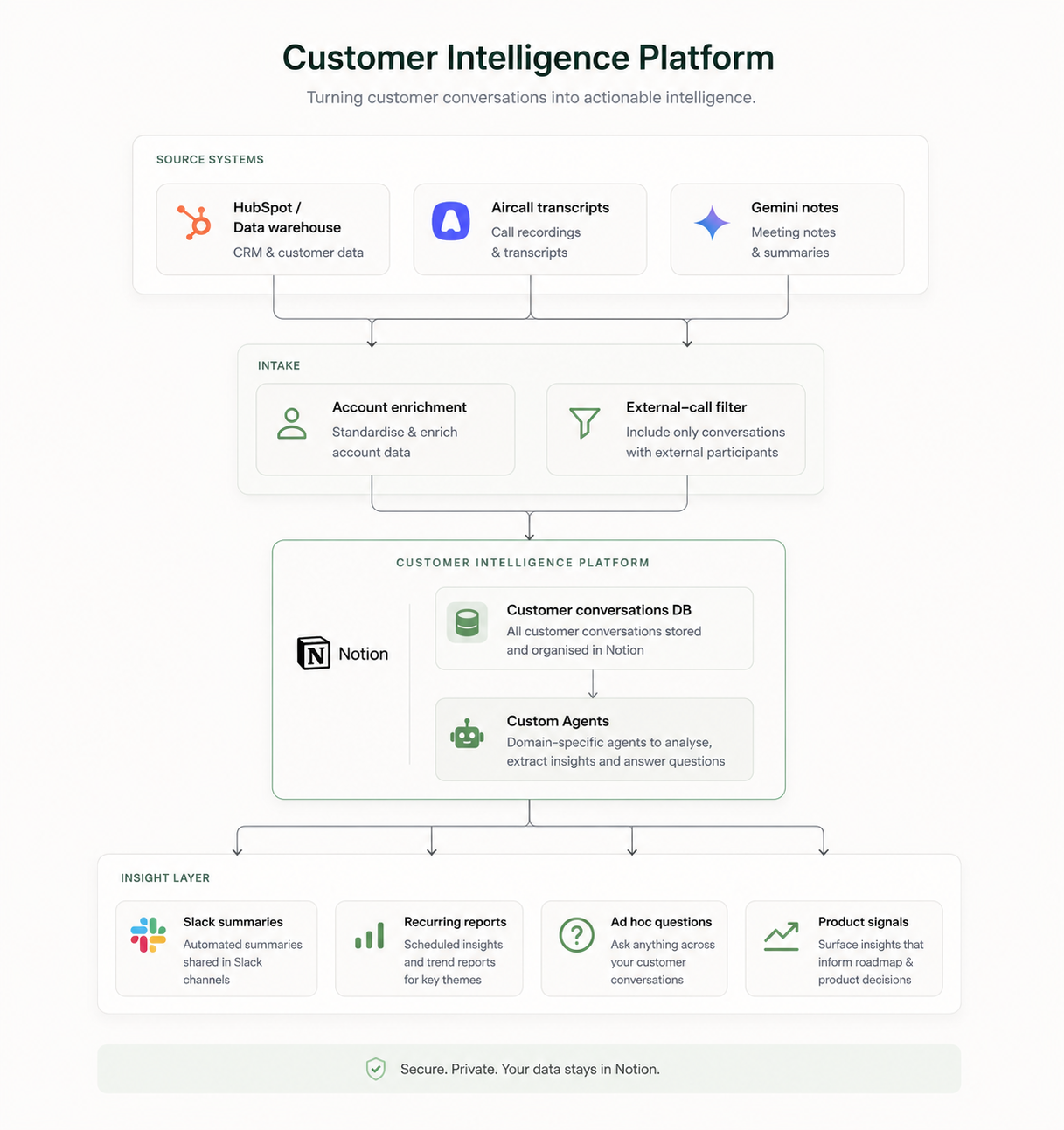
I designed a system that captures Fresh's sales and support conversations, matches each one to the right customer account and makes the source material searchable by Product, Sales and Support.
It produces weekly Slack summaries, recurring reports on common themes and sourced answers to questions about what customers are experiencing. The aim was not to create another research repository, but to bring useful evidence into the places where teams already make decisions.
Problem
Fresh speaks with clinics every day, but the useful detail from those conversations was spread across Google Meet recordings, Gemini notes, HubSpot records and individual memory.
Product could investigate a question across several customers, but doing so meant finding the relevant calls, reading each transcript and manually reconnecting the evidence to account context. Sales and Support also had no simple way to see whether an issue they heard was isolated or recurring.
The missing piece was a dependable path from everyday conversations to evidence that teams could search, compare and verify.
How I built it
- I defined which conversations belonged in the system. A meeting qualifies when it includes an external participant, and every record keeps the original notes or transcript rather than only an AI summary.
- I designed the account-matching workflow that connects participants to a clinic and HubSpot account, then adds useful context such as segment, account owner, meeting type and date.
- I modelled the conversation store and analysis workflows so repeated requests, objections and product problems could be compared across a selected period. Every finding retains links to the conversations behind it.
- I tested the pipeline against real conversation sets and reviewed where account matching, theme grouping or summaries broke down. That iteration shaped the qualification rules and the final outputs: weekly Slack themes, recurring reports and sourced answers to direct questions.
Value
The system turns daily customer conversations into evidence the product team can act on. Repeated problems become visible across accounts and segments, giving the roadmap a stronger signal than whichever anecdote was heard most recently.
- Stronger prioritisationProduct can compare the frequency and customer context behind a problem before deciding where to invest.
- Faster investigationTeams can move from a question to the relevant accounts, themes and source conversations without manually searching several systems.
- Better customer follow-throughSales and Support can see when an isolated request is part of a wider issue and close the loop with affected customers.