What I built
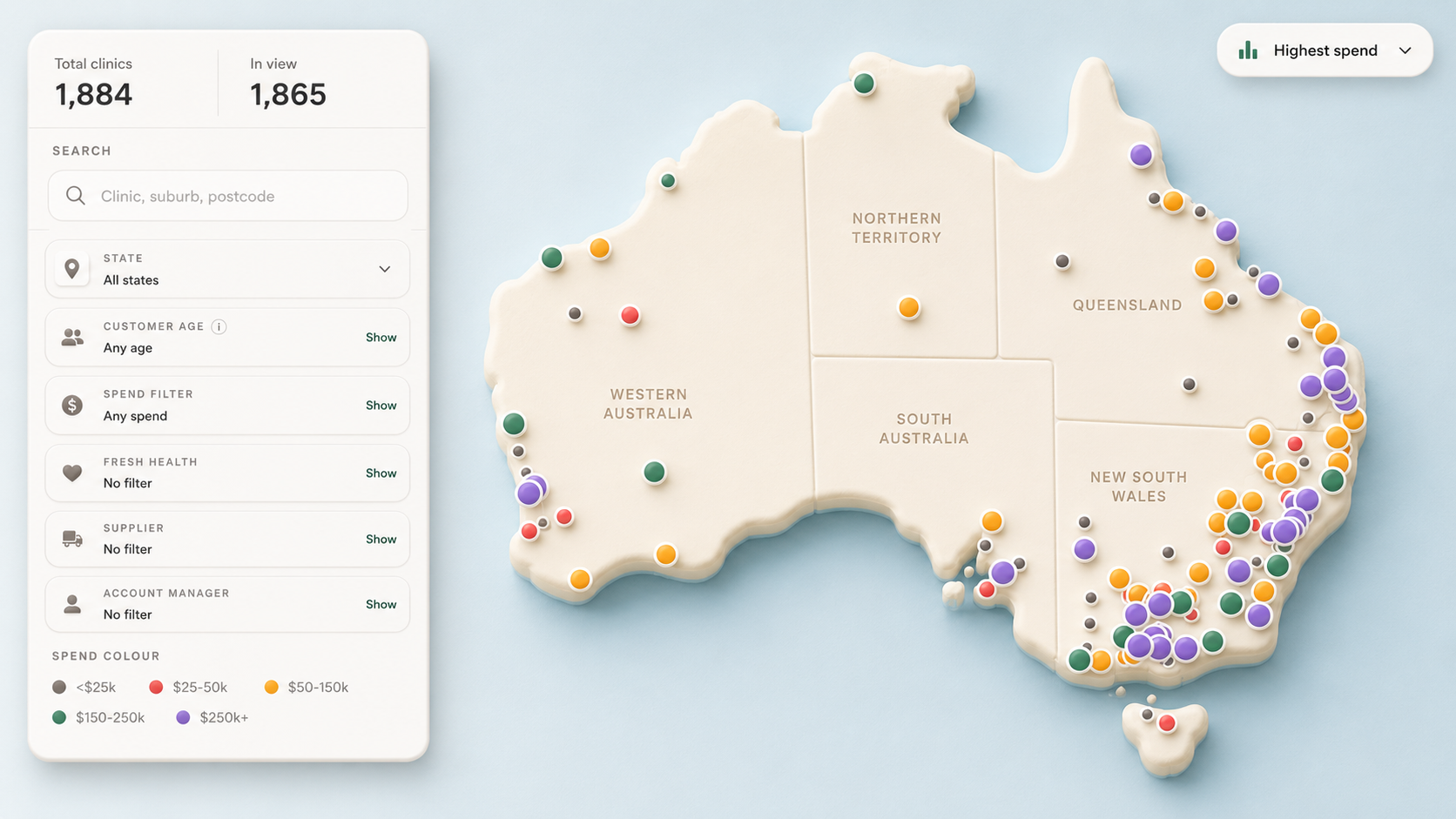
I built an interactive customer map for Fresh's Sales and Account Management teams.
It combines clinic locations with account ownership, spend, supplier relationships and customer-health information. Teams can filter the customer base, inspect the context behind each marker and create a practical list of clinics for a field visit.
Problem
Fresh already held the information needed to plan customer visits, but it was organised around individual account records rather than a territory.
An account manager could look up one clinic at a time, then use a separate map to work out whether a group of customers formed a sensible route. Comparing ownership, spend and account health meant moving back and forth between records.
The map needed to bring those decisions into one view without reducing a customer to the colour of a marker.
How I built it
- I mapped the planning workflow before designing the interface: choose a territory, narrow the relevant accounts, understand why each clinic matters and build a visit list that is geographically realistic.
- I joined organisation, clinic, address, ownership and purchasing records through consistent customer identifiers. Addresses became coordinates, and purchasing data was grouped into spend profiles that could be scanned without losing the underlying values.
- I built filters for account owner, account age, supplier relationship and customer-health signals. Selecting a marker reveals the clinic and commercial context used to place it in the result set.
- I tested the map against incomplete addresses, duplicate clinics and dense metropolitan clusters. Those cases drove the fallback rules, marker behaviour and the decision to keep the map and working customer list in sync.
Value
The map turns customer data into a practical field plan. Account managers can spend less time assembling routes and more time visiting the clinics where an in-person conversation is most useful.
- More productive field timeGeography, account health and commercial context are considered together, so a route reflects opportunity rather than proximity alone.
- More relevant customer visitsAccount managers arrive with the clinic's relationship, spend and current needs already in view.
- Consistent prioritisationTeams plan territories from shared customer information instead of individual spreadsheets and judgement calls.